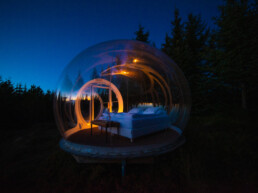
First: come for Iceland, treat the lights as a bonus
This is the single most important shift in mindset, and it changes everything.
Come to Iceland for Iceland — the waterfalls, the black beaches, the glaciers, the steam rising off the ground, the empty roads through landscapes that don’t look real. Enjoy that. Then treat the northern lights as a wonderful bonus on top, not the reason the trip succeeds or fails.
People who come only to see the aurora often go home disappointed, because they pinned an entire trip on something no one controls. People who come to experience Iceland, and stay ready for the lights, tend to go home happy either way — and they’re the ones who actually catch the aurora more often, because they’ve built their trip the right way.
So the goal is simple: enjoy the journey through Iceland, and shape that journey so the bonus becomes as likely as possible. That’s exactly what we try to do.
Why being on a rental car matters
If you base your whole trip on day-tours out of Reykjavík, you’ll spend most of your time in and around the city. Those tours can be excellent — this isn’t a knock on them. But the trade-off is real: you end up seeing a fraction of the country, because you keep returning to the same base each night.
Being on a rental car and travelling around the country is a different kind of freedom. You see far more of Iceland by day, you stay in the countryside at night, and — crucially for the aurora — you can move. More on why that matters in a moment.
To be completely fair: staying in Reykjavík and taking evening aurora tours is a perfectly valid choice. It’s simpler, and you don’t drive. It’s a genuine option, and for some people it’s the right one. But if you want to both see more of Iceland and improve your aurora odds, self-driving gives you both. It’s a choice, and I want you to make it with open eyes.
The day is for seeing. The evening is when the opportunity opens.
Here’s the rhythm that matters.
During the day, you explore and enjoy. The aurora isn’t a daytime event, so daytime is simply for experiencing Iceland.
The opportunity opens in the evening, usually starting around 7–8pm and lasting until 4–5am, with midnight being the statistical peak based on the research. So the period that really matters is after you’ve arrived at your hotel for the night. That’s the window. And being ready in that window is what separates a good chance from a missed one.
This is exactly why, on our self-drive trips, we analyse the area around each hotel we use — and tell you where you could go that evening. Sometimes it’s worth driving a short distance to get out of light pollution. Sometimes there’s a beautiful spot nearby that makes a stunning backdrop for photos. Every hotel is different, so we look at each one through that lens and give you the local knowledge in advance.
Understanding the forecast — and the clouds
People often think the aurora forecast is the whole story. It isn’t.
A geomagnetic storm can hit and the activity can be high — but you still have to actually see it, and clouds are usually the hardest problem. The lights can be dancing brilliantly above a thick cloud layer and you’ll see nothing.
This is the real reason being on a car matters so much. If clouds sit over your hotel, you want to be able to drive — even one or two hours — to find a clear patch of sky. A fixed base can’t do that. Mobility is the single biggest practical advantage you have against clouds.
So when you’re at your hotel in the evening: check the aurora forecast (activity level and cloud cover both). Talk to reception — they often know the local conditions and the best nearby spots. And ask about an aurora wake-up call. This one is genuinely important: many good hotels will wake you if the lights appear, so you can sleep without stress and not miss a sudden display. Because here’s the truth — it often happens unexpectedly, even when the forecast said otherwise. It’s nature; you can’t use science to predict it 100%.
That readiness — being on a car, watching the forecast, talking to locals, having a wake-up call — is what turns “we got unlucky” into “we were ready when it happened.”
So why we believe self-drive is the best way
Putting it all together: a self-drive trip lets you see far more of Iceland by day, puts you in the countryside (often darker skies) at night, and — most importantly — gives you the mobility to chase clear skies when clouds get in the way. Paired with knowing where to go around each hotel and being ready in the evening, that’s the strongest position we know how to put you in.
We can’t promise the aurora. But we can do everything within our power to improve your chances — and help you be ready when the moment comes.
Doing it safely (please read this part)
Being mobile is your biggest advantage, but only if you do it safely. A few things I ask of everyone:
Be on a good 4×4. Weather and road conditions in Iceland can change fast, especially in winter. A capable vehicle isn’t a luxury here — it’s safety.
Always put safety first. If conditions are bad, the aurora is not worth a risk. It will come another night.
Tell reception your plans before you head out in the evening.
Keep the road-assistance number ready in case something happens and you end up waiting in the car for a while. Have warm clothing, water, and a charged phone.
And one thing locals will thank you for: never park in the middle of the road. People do this — they stop on the road and wander around in the dark to watch the lights — and it’s genuinely dangerous, because other drivers can’t see them. Always pull your car fully off the road into a proper spot, so you’re not a hazard to anyone while you wait for the aurora to dance.
Come for Iceland. Stay ready for the lights. Do it safely and respectfully. That’s the honest formula — and it’s the one we build every self-drive trip around.