

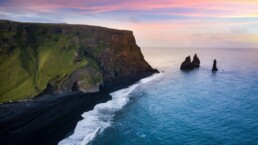
About Iceland's Breathtaking Black Sand Beach
About Iceland's Black Sand Beach
By Michael Chapman
The hauntingly beautiful Reynisfjara beach is one of South Iceland's most beloved sites.
About Iceland's Black Sand Beach
By Michael Chapman
The hauntingly beautiful Reynisfjara beach is one of South Iceland's most beloved sites.
With its inky coastlines and stunning highland interior, Iceland has grown into its reputation as a true paradise for those looking to immerse themselves in nature at its most unusual.
Much like its creeping glaciers, mountain peaks, and moss-blanketed lava fields, Iceland’s volcanic beaches draw visitors to this country in their thousands.
Much of this interest can be attributed to Reynisfjara, which has been attracting guests since National Geographic magazine voted it among the top ten of the planet’s most beautiful non-tropical beaches back in 1991.
Neither its reputation nor its beauty has diminished over the years. In fact, with more exposure than ever before, this particular stretch of shoreline could be considered at the height of its popularity. The shoreline’s stark monotone shades, distinctive geology and relative proximity to Iceland’s capital city, Reykjavík, all bolster this fact.
If you’re looking to visit this iconic beach during your travels, make sure to read on and learn all the essential travel information before you arrive.
Why does Iceland have black sand beaches?
Whereas most beaches on Earth are either pebbled or host to golden sands, those in Iceland are dark obsidian in colour.
Generally, sand colour depends on the rocks from which it originated, with tan-coloured quartz and feldspar being the two most common materials found elsewhere.
Iceland, on the other hand, was formed through a series of historical volcanic eruptions. There are over 200 volcanoes on the island, many of which remain active and capable of shaping the terrain around them.
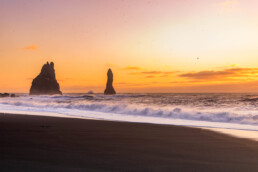
Iceland’s black sand beaches, now famous the world over, are just one of the fascinating geological consequences that have arisen due to these prior eruptions.
When flowing lava contacts seawater, a violent, yet spectacular reaction occurs. The lava enters a rapid cooldown phase immediately, breaking down into tiny debris particles that become scattered over vast distances.
This process does not change the rock’s colour, merely its density, leaving Iceland’s shorelines as a stunning reminder as to how this country’s natural beauty came first about.
PLAN YOUR JOURNEY
Travelling to Iceland?
Check our overnight tours with a driver guide that includes a one night stay in a bubble.*Starting from ISK 74.900 per person

Why is Reynisfjara considered the best black sand beach in Iceland?
With its unique, jet-black pebbles, peculiar basalt columns and towering rock stack, it is no wonder that Reynisfjara holds an iconic status among Icelandic natural attractions.
Reynisfjara is the most famous of its contemporaries for a variety of reasons. The first is practical, as it is located roughly at the centre-bottom of South Iceland. These coordinates have made it, and the adjacent village of Vík í Mýrdal, popular stops for travellers looking for excitement while passing through the area.
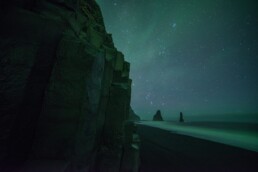
The second reason falls to a cluster of 66-metre high (217 ft) basalt rock stacks that stand off the shoreline. Known as Reynisdrangar, this compelling landmark compliments South Iceland surroundings landscape no-end, adding drama and grand scale to an otherwise remote location.
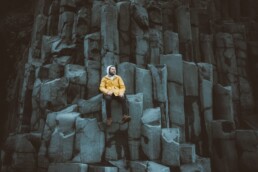
There are even more novelties that make Reynifjara worthy of your interest. On the opposite side to the ocean, the beach is enclosed by steep cliff edges that rise upward like a grey pyramid. Named Garðar after a nearby farmstead, ancient lava flows have shaped the rock face into near-perfect octagonal columns, making them a wonder unto themselves.
Getting photographed sitting atop these naturally formed steps is a matter of tradition for many guests eager to contribute their own pictures to the thousands found across social media.
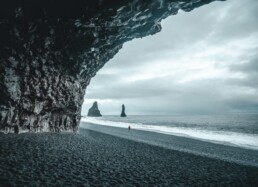
Further along the beach, Reynisfjara boasts its own pirate’s grotto, a damp seaside cove often overlooked by guests hurrying to pack their days. Known as Hálsanefshellir cave, this enormous chamber sees the distinctive Garðar columns extend across its ceiling and walls, the natural design so intricate as to appear sculpted by hands.
Where is the black sand beach in Iceland
Reynisfjara sits beside the quaint coastal village, Vík í Mýrdal, and is considered a staple stop for sightseeing tours in South Iceland. Despite being home to little more than 300 or so people, Vík (as it is shortened) serves as the optimum spot to grab a bite to eat or bed down for the night.
Reykjavík, where most visitors will be departing, is approximately 180 kilometres (112 miles) to Reynisfjara. Vík í Mýrdal lies directly on Iceland’s Ring Road, meaning guests will have to drive around two and a half hours to reach the beach, not accounting for the pit stops and points-of-interest en route.

Reynisfjara and Reynisdrangar in Icelandic Folklore
Icelandic folklore is a rich tapestry of ancient tales, passed down generation-to-generation by word-of-mouth and through the Sagas’ epic poetry.
Unsurprisingly, Reynisdrangar has not escaped from inspiring storytellers, with many yarns and anecdotes having been spun about this fantastical place over the last thousand years.
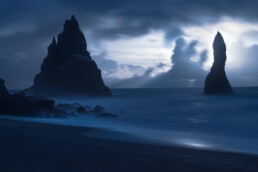
One story speaks of two trolls, now considered extinct in Iceland, caught in the sunlight while dragging their boats to shore. All that was left of their petrified bodies was the Reynisdrangar rock stacks, exposed to the air, sky and waves for the remainder of eternity. Another story claims the same trolls were frozen as revenge for stealing a local farmer’s wife.
In either case, it’s the trolls that got the short-end of the stick (—as trolls are liable to do). While scientists and mystics will differ as to these claims’ veracity, there is no denying the tangible sense of magic, of mystery, this beach draws out of those who visit.
Such thoughts occurred, at one time or another, to the location scouts of HBO’s popular ‘Game of Thrones,’ who utilised Reynisfjara as Eastwatch-by-the-Sea in two episodes of the show’s seventh season. Of course, hours could be spent arguing over whether Game of Thrones constitutes a modern-day folktale, but we thought it was worth mentioning here nonetheless.
Is Reynisfjara black sand beach safe to visit?

While it might seem counterintuitive to visit an area considered dangerous, there are certain safety precautions you must keep in mind at Reynisfjara. Signposts along the beach allude to ‘Sneaker Waves’; these have a habit of catching off-guard guests who venture too close to the water. More than capable of pulling an adult out with it, this water barely, a few celsius, is almost impossible to escape from.
These warnings must be taken as gospel, as anyone unlucky enough to be dragged out to sea at Reynisfjara will soon fall victim to dangerous rip currents, deteriorating a dire situation further. Even on apparently calm days, there is no telling how the waves will behave; some roll in small, others surge up the sand as if from nowhere, shocking all who witness it. If ever there was a place to supervise your children closely, this would be it.
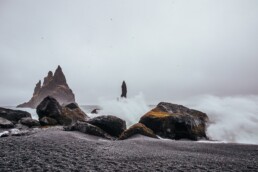
A quick search on YouTube will persuade you that, indeed, the beach poses an all-too-real threat for those who dismiss the warning signs as overly cautious. Regardless of how epic the surrounding area might be, the North Atlantic ocean is notoriously unpredictable, cold and more-than-capable of reaching right up the shore. If there’s a lesson here, make it this; don’t ever turn your back on the water. Remain vigilant at all times.
While there is no question Reynisfjara is one of Iceland’s most beautiful sites, it is imperative to respect the beach from a distance that ensures the safety of your party. Unfortunately, fatal accidents have occurred at the site in the past, which should only go-to-show how vital it is to trust the mandated advice.
Do not assume the area is safe just because others at the beach act like it’s so, and avoid visiting during bouts of rough weather. Iceland’s nature is a sight to behold, but never at the expense of one’s life.
Does Iceland have other black sand beaches?
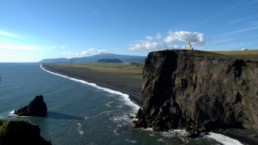
Yes, you can find black sand beaches all around the country, and many are arguably just as beautiful as Reynisfjara. In truth, most of Iceland’s beaches can be constituted as ‘black sand’, though some are more famous than others. Make sure to get out and explore during your time here—you might find a hidden gem, just to yourself.
In South Iceland, we have the sands surrounding Dyrhólaey promenade, the dark vastness of Solheimasandur, and further east, the iceberg-lined shores of Diamond Beach. While sightseeing on the South Coast, you can visit all these locations, best spread out over a few days.
Those remaining in Iceland’s Capital Region will want to pay a visit to Seltjörn, a black sand beach located on the sublime Seltjarnarnes Peninsula. Home to Grotta lighthouse, this area is popular among stargazers, Northern Lights hunters, and anyone looking for a quick break from city life. A mere ten minutes drive from downtown Reykjavík, pack a towel and try out the soothing foot bath, free-to-use for all those in the vicinity of the lighthouse.
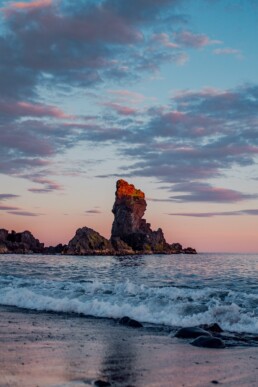
The Snæfellsnes Peninsula has its share of black sand beaches, the best known being Djúpalónssandur, with its gnarled volcanic rocks and small aquamarine ponds. Snæfellsnes offers stranger sights than black sand beaches, however. While it’s odd that golden sand is considered a novelty in Iceland, visitors can find just that at Skarðsvík Bay. On sunny days, this remote, albeit gorgeous site resembles a stretch of Mediterranean shoreline.
If you’re looking for something to blow all else from the water, then Rauðisandur, or Red Sands, in the Westfjords will suit your needs. As its name suggests, this 10-kilometre long beach boasts almost maroon-coloured sand that is, in fact, primarily composed of crushed scallop shells. Seals are known to frequently lounge in this area, so keep your eyes peeled for local wildlife.
What attractions are nearby to Reynisfjara in Iceland?

If you’re planning this most famous of Iceland’s black sand beaches, then you’ll want to make sure you check out other great attractions in the area. (Frankly, doing otherwise is downright negligent.)
Dyrhólaey promontory is one site worthy of a visit, beloved by guests and locals alike for its towering bird cliffs, photogenic lighthouse and impressive rock arch. Aside from the fact that South Iceland’s views are truly spectacular from Dyrhólaey, Atlantic Puffins nest here each summer, making it a must-stop on any sightseeing tour.
Seljalandsfoss and Skógafoss waterfalls are also found on the South Coast, both visible to passing drivers from the Ring Road. These two are considered among the most famous sights not just in South Iceland, but the entire country, so make sure to schedule time in for a visit.
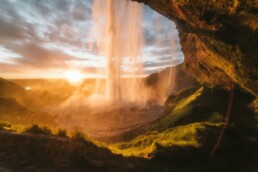
At sixty metres high (197 ft), Seljalandsfoss is a narrow waterfall that cascades over an ancient sea cliff, with a makeshift trail that leads directly behind the water. Only a five-minute stroll from Seljalandsfoss is another waterfall called Gljúfrabúi, hidden inside the crevasse of a canyon wall.
A short drive away, Skógafoss waterfall is much broader and more powerful than Seljalandsfoss, and as such, emits an enormous plume of steam at its base. Photographers use this water vapour to play tricks with the light, adding double rainbows to their images.
According to legends, the treasure of a former Viking resides behind Skógafoss waterfall. However, some locals embellish the tale further, claiming that this concealed gold is protected by a mean old troll afraid to step out from his cave into the light.
Whatever the case, you’ll appreciate stunning views of this colossal landmark, both from the lagoon at the base of the waterfall, and the viewing platform up top which can be reached by a wooden staircase.
What season shall I visit Reynisfjara in Iceland?

Given its easy accessibility just off the Ring Road, Reynisfjara can be visited regardless of whether you choose to visit in the summer or winter. Both seasons offer their advantages and disadvantages.
During the winter, the black pebbles and snow congregate together to form stunning contrasts beneath your feet, and there is no describing that breathtaking sensation of seeing the mountains above the beach cloaked in white.
Another benefit of visiting Reynisfjara during the winter is that you will have a better chance of avoiding the crowds. As aforementioned, Reynisfjara is one of Iceland’s most popular attractions, so extra consideration should be taken if you’re hoping to have the area to yourself, or as close to as possible.
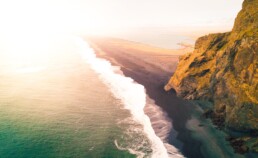
While you may find yourself joined by other travelling parties during the summer, you will have more daylight hours in which to appreciate the beach. Such an abundance of sunlight is perfect for those visitors looking to stretch out their journey, making sure to maximise their time at each stop.
On top of that, better weather will be advantageous for seeing further into the distance, allowing you a better view of the surrounding countryside. Given the breadth of beauty South Iceland offers, this point has more value than you might at first realise.
In summary, it matters not when you choose to discover Reynisfjara, only that you take the time to do so. Stepping onto its jet-black stones, breathing in that salty sea air, culminates in an experience like no other. With vast views over the ocean and encircling mountains, you’ll no doubt be pleased you made the extra effort.
PLAN YOUR JOURNEY
Travelling to Iceland?
Check our overnight tours with a driver guide that includes a one night stay in a bubble.*Starting from ISK 74.900 per person


Where was Love on Iceland filmed?
Where was Love on Iceland filmed?
By Michael Chapman
Chloe discovers more than just sheep, mountains and glacier lagoons when her ex-boyfriend, Charlie, arrives on her Iceland vacation unexpectedly...
Where was Love on Iceland filmed?
By Michael Chapman
Chloe discovers more than just sheep, mountains and glacier lagoons when her ex-boyfriend, Charlie, arrives on her Iceland vacation unexpectedly...
Love on Iceland is a Hallmark romantic-comedy directed by Clare Niederpruem and starring Kaitlin Doubleday and Colin Donnell as former partners reigniting their passion while travelling around Iceland.
Doubleday plays the part of Chloe, an overworked American podcaster looking to bring her boss new ideas by taking a trip abroad with her friends, played by Patti Murin and Preston Sadleir. But when Chloe’s ex-boyfriend and high school sweetheart, Charlie (Colin Donnell), tags along without invitation, things soon heat up in unexpected ways—fortunate, given the winter conditions.
The production marks the first time the Hallmark Channel has used Iceland as a shooting location, and the filmmakers have made the most of the photographic opportunities offered. This is something Love on Iceland does incredibly well, showcasing their exquisite choice of setting with wide sweeping shots that all but pop from the screen.
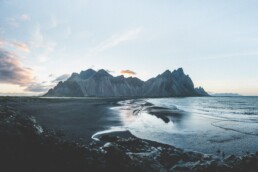
One can’t help but get the impression watching Love on Iceland that the filmmakers were grateful for the chance to shoot somewhere other than Canada. Such is the remarkable job they’ve done translating Iceland to the big screen. The film was shot in fifteen days, edited in two weeks, and premiered for the first time in January 2020.
As with everyone who visits Iceland, the cast members quickly fell head-over-heels with their surroundings and were soon posting pictures from the set on their Instagram accounts.
‘You couldn’t recreate this place or experience anywhere else in the world,’ Donnell tells Hallmark in a behind-the-scenes interview. ‘The people are amazing. The landscape is just absolutely stunning. And there is this wonderful culture that infuses the way of life here. It makes you feel at home.’
What were the shooting locations of Love on Iceland?
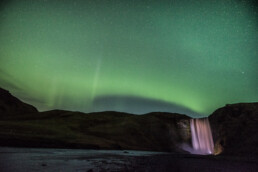
Love on Iceland (2020) showcases many of the natural attractions that have made this country famous, ranging from its glittering glaciers to its black sand beaches and dramatic waterfalls. Much of the film is shot in South Iceland, which has been attracting international visitors with the diversity of its landscape and awe-inspiring natural landmarks for the last decade.
Nicknamed as ‘The Crown Jewel of Iceland,’ Jökulsárlón glacier lagoon serves as an early scene in the film. Like all who visit this majestic locale, the central characters are notably breath taken by the site’s ethereal charm and otherworldly aesthetic. Jökulsárlón is known for its floating icebergs, playful seal colony and magnificent views of the national park in which it resides.
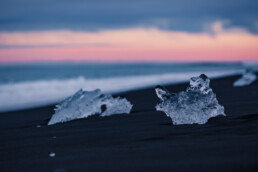
Diamond Beach, only a five minutes stroll from Jökulsárlón, also makes an appearance in Love on Iceland. This volcanic stretch of shore often sees icebergs washing up against the pebbles, creating stark contrasts that are a real feast for the eyes. However, do note the film indicates that the site is easily reachable from Reykjavík, given its where the cast chooses to take a walk after dining out in the city, some 380 km away.
In truth, we recommend you take a few days to explore the breadth of the South Coast, Diamond Beach included.
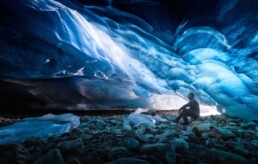
Chloe and her travel pals also spend time exploring Vatnajökull’s crystalline ice caves, some height above the lagoon. Once again, the filmmakers have excelled in translating just how awe-inspiring these caverns can be, taking extra care to capture shades of blue so vibrant that one could be forgiven for believing CGI enhanced the scene. Not true; Vatnajökull’s ice caves really are that splendid!
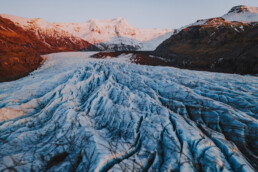
Several other Vatnajökull area shots, including those of Skaftafell Nature Reserve’s luscious hillsides and the creeping glacial tongue, Svínafellsjökull, add to the film’s setting, adding a level of intrigue and depth to the cinematography.
Other treasures of the South Coast sightseeing trail are also on display, namely the haunting black sand beach, Reynisfjara, and the picturesque waterfall, Seljalandsfoss. At 60 metres high, Seljalandsfoss is always high on the bucket lists of prospective travellers, drawing interest with the narrow pathway that leads directly behind the cascading water—perfect for photographers!
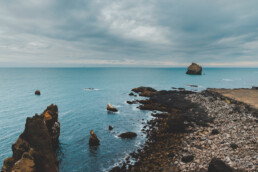
Only a short drive away, Dyrhólaey promenade is utilised thanks to its fantastic panoramas over the surrounding countryside, as well as the scenic rock arch that drops sharply into the crashing waves. With incredible views of the shorelines, distant mountains and wide-open ocean, the former-island of Dyrhólaey attracts thousands of nesting seabirds each summer, as well as hundreds of eager twitchers who come to see them.
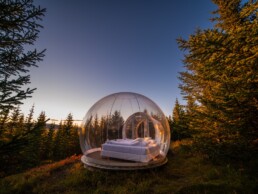
In one intimate scene, Chloe and Charlie spend a night in one of our very own Bubbles, which are also found in South Iceland. Fans of the movie love to picture what their stay might be at this novel and immersive choice of accommodation, carefully placed in the lush depths of an Icelandic forest.
Other locations used were the small town of Hafnarfjörður and the capital city itself, Reykjavík. Love on Iceland does a fabulous job portraying the city as the quaint and highly livable place it is, focusing its lens on the beloved downtown pond, Lake Tjornin, as well as more iconic sights like Hallgrímskirkja Lutheran Church and the glassy architecture of Harpa Concert Hall.
Why should you watch Love on Iceland?
If ever there was a film that made you desperate to pack your bags and set-off travelling, then Love on Iceland would be it. With masterful control of the camera and a clear vision of the film being made, the director, Niederpruem, captures the local scenery in such a way as to exemplify its most unique and dramatic qualities.
Even Icelanders who have seen the film, no doubt, concluded its 84-minute runtime with the urge to hop the back-fence and rediscover all their homeland has to offer.
Love on Iceland does not shy away from providing a little background information on its setting. The filmmakers have sprinkled interesting facts about Iceland throughout, providing another reason to watch this movie should you be planning a trip here in the near future.
How can you see the locations in Love on Iceland?
If you’re hoping to stay in a bubble just as Chloe and Charlie did in the film, may we direct you to the Guided Tours listed on our main page.
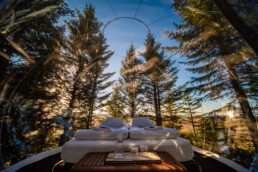
These excursions, available for both winter and summer travellers, not only allow you to visit many of the natural attractions showcased in Love on Iceland
During the summer, our Bubbles offer long daylight hours beneath the glowing Midnight Sun, while guests in the winter will continuously be on the lookout for the elusive Northern Lights dancing majestically through the see-through ceiling. During the day, you will be led by one of our professional and experienced guides around Iceland’s most cherished locales.
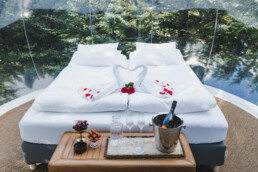
A trip such as this is perfect for new couples, honeymooners and devoted partners looking for their next adventure overseas.That’s not to say that the single travellers among us won’t have an incredible time too.
Who knows in which direction cupid’s arrow points? Iceland is one of the most romantic and enchanting destinations in the world. Falling in love here—and with here, we might add—is not a hard thing to do.
Icelandic food we love
Icelandic Food We Love
Do you ever outgrow that inner desire to try something totally out of the box? Well, the adventure doesn’t end with a trip to the nature in Iceland. There is something more magical to this country.
Icelandic Food We Love
Do you ever outgrow that inner desire to try something totally out of the box? Well, the adventure doesn’t end with a trip to the nature in Iceland. There is something more magical to this country.
What’s life without a taste of adventure? Do you ever outgrow that inner desire to try something totally out of the box? Well, the adventure doesn’t end with a trip to Disneyland, a tour of the museum, or even a road trip to your favorite spot.
It can be as simple as treating yourself to a taste of traditional flavorsome food. The next time you think of trying something unusual, here is our carefully compiled list of the top 10 Icelandic Food you’ll love, as much as we do.
Icelandic Dark Rye Bread - Dökkt Rúgbrauð
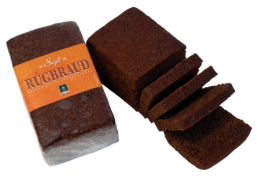
If, like us, you have a deep love for traditional food, you’ll agree that this food is not the conventional type of bread we were raised to eat at breakfast. From its finest ingredient to its enticing appearance and brown crunchy taste, it’s no doubt a perfect combo that leaves you craving for more. It is best enjoyed with thickly spread butter, smoked lamb, and fish stew. You’ll love to share this goodness with friends and family!
Iceland, though having a population of 340,813 residents is definitely not lagging in the food industry, especially when it comes to really healthy foods.
In Iceland, the bread is traditionally baked in the ground using steam but with the advance in today’s technology, it’s a lot faster to oven bake. Rye is rich in magnesium, fiber, and necessary body-building nutrients. It’s also good for weight loss with its low fat and gluten content.
It is found in homes, bakeries, cafes, stores, and supermarkets within and outside Reykjavik. Iceland central city has the highest number of restaurants and outlets where residents can make purchases of their favorite food till late hours of the night; some other parts of the country do not enjoy this luxury.
Ice Cream - Icelandic Style

Have you ever seen a sobbing child’s tears stop midway at the sight of ice cream? We have and it’s always a heartwarming sight. Ice cream has that same show-stopping effect in Iceland. Come cold, winter or hurricane; ice cream parlors like Valdis are always in business.
You’ll never have to look too far to find a store, as this Iceland delight is also sold in gas stations. You’ll find yourself screaming “I need some more, get me some Icelandic ice cream”. We told you this country is the real deal when it comes to really great food. Here’s a word of advice, ensure you go with extra money especially when you’re shopping for ice cream, because the sight of it alone will make your eyes pop. It’s loved and enjoyed by all age ranges and can be a unifier.
There’s the rainbow cheesecake ice cream, Iceland magical mermaid ice cream, white chocolate, pistachio, oreo, watermelon, and just like you, we’re also thinking there might not be an end to these flavors, as new flavors keep showing up every time. Ice cream happens to be a nutritional source of vitamins, minerals, calcium and it is a brain stimulant.
If you previously thought ice cream was all junk food, now you know it is good food for you. So the next time you see a long queue, it could be some thirsty ice cream lovers who can’t get enough of the flavors. Icelanders are serious about their ice cream and so are we!
PLAN YOUR JOURNEY
Travelling to Iceland?
Check our overnight tours with a driver guide that includes a one night stay in a bubble.*Starting from ISK 74.900 per person
Icelandic Food - Harðfiskur
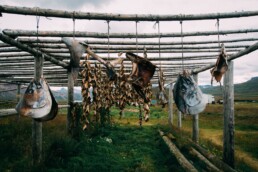
When you walk into a restaurant like Snaps Bistro in Reykjavik, you can be sure the fish served you is freshly caught, a term Icelanders know as “Fish Of The Day. Well, we cannot expect less from a country that’s primarily surrounded by the North Atlantic Ocean, which is home to various species of fish.
The exportation of fish plays a major role in the Iceland economy, as it’s the country’s 2nd most exported product, after Aluminium. Iceland is blessed with high-class seafood restaurants like messinn, fish market, and fiskfelagid, amongst several other outlets within and outside Reyjavik.
Whether dried, baked, grilled, boiled, or fresh, fish is no doubt a core food in Iceland that cannot be overlooked. Dried fish is a well-liked snack and everyday delicacy, easy to break, and loved by locals and foreigners. It’s properly cleaned, sliced carefully, and hung to dry in an open space, until it’s fully dried and brittle.
In basic biology we were taught that Fish is a very vital source of a balanced diet. Iceland fish comprises fatty acid and 80% high- quality protein which is a curative to protein deficiency symptoms like headache, fatigue, and muscle cramping. Dried fish is famously consumed with an addition of Icelandic butter, the taste is heavenly.
Hot Dogs

What did you hear about Icelandic hot dogs because the hype is true! You think you’ve tasted the best hot dog, wait till you’re blown away by the Icelandic recipe. So what’s so unique about this food and why is it so loved and highly consumed with people eating it all day long? Well, as always, the taste is the difference!
The hot dogs are well blended with tasty lamb meat, sweet mustard, ketchup, creamy remoulade, sausage, raw and crisp onion. Be sure to go along with a towel or napkin, as the sauce could stream down your chin while you’re hurrying to grab a full bite. Though the hot dog is sold in stores, road-side stop, airport landings, malls, gas stations across the country, Bæjarins Beztu Pylsur, a chain of hot dog stands, founded in 1937, with over 80 years of consistently blowing our minds with their flavors, is still the most ancient and popular hot dog outlet in Reyjavik and was a host to prominent Bill Clinton in 2004 during his stay in Iceland for a UNICEF Conference, who preferred his with only mustard. You can have all the hot dog toppings the Icelandic way by saying eina með öllu (meaning “One With Everything”).
In 2006, the British Guardian Newspaper chose Bæjarins Beztu Pylsur as the best hot dog stand in Europe. In later years, other celebrities and dignitaries have also been thrilled by the special Iceland food. How else will you explain your visit to this iconic place without an experience with the best hot dog in town? Over in Iceland, the hot dog is a big deal and will be enjoyed for more years to come.
Coffee

When coffee becomes the new tea in a country like Iceland, it’s no surprise it’s the 3rd largest consumer of coffee in the globe per capita. That’s not to suggest that tea is completely ignored, the demand is only on a much lower end, compared to coffee. It’s already Iceland anyway, so why wouldn’t they make do with some strong hot and sizzling cup of coffee.
In 1958 Mokka Kaffi became the first coffee shop, a time when coffee was traditionally brewed at home. Before long, it soon became a home away from home and a house-hold name as Icelanders got comfortable hanging out with friends and family at the coffee shop. Mokka Kaffi then introduced the first never before seen espressos machine, which improved the rate of coffee production and won them a place in the heart of several Icelanders.
Today, there are more coffee shops within and outside the Iceland capital city of Reyjavik and some of the coffee houses provide reading materials and internet access, making these places a highly sociable center. Despite not having the big coffee brand names like Starbucks and Costa, Icelanders have molded for themselves a specialty of coffee that’s loved around the world.
Coffee in Iceland is majorly imported, as the weather condition in the country does not fully support the coffee plant. Healthy rivalry among coffee sellers in Iceland has led to a better refinement of the end product as each business in a way wants to get the attention of the not so large country populace. The coffee stores are continuously improving on the status quo so they don’t go out of business – what’s a good coffee store without customers?
Both the young and old can enjoy their favorite coffee flavor with sufficient cream and sugar. Coffee, aside from being a fat burning supplement, it reduces the risk of heart disease, lowers the risk of Parkinson’s, improves physical output, and also boosts metabolism. This Iceland food is sold in fast food hubs, supermarkets, gas stations, restaurants, and coffee parlors. Coffee is served in variants like espresso, cappuccino, latte, and mocha. In Iceland, it is good practice to offer your visitors some coffee mixed with milk and sugar. Coffee and Iceland doughnut go well together.
Icelandic Bun - Kleinur
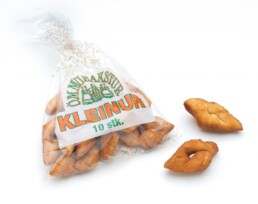
Did you know Kleinuar is made up of sour milk, the same ingredient that makes up Skyr? Sour milk is medicinal for people with hypertension and calcium deficiency. What’s there not to love about this Iceland food, it’s a favorite food and traditional Christmas snack.
With its crunchy taste and flavored toppings, you cannot go wrong on this one. Just ensure your stomach is half full before visiting any of the outlets because the doughnuts are always fresh and delicious and the queue, if any, is worth the wait.
The doughnut has its peculiar shape, having its beginnings in Scandinavia. The bakeries are full of mouthwatering pastries and bread where locals and tourists have access to variants of their choice.
Icelandic Lamb Soup - Kjötsúpa
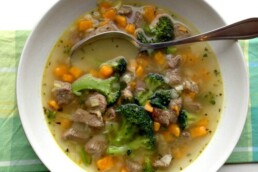
Well, they say “You haven’t lived until you have had a taste of the Icelandic lamb soup”. There’s a lot of truth in that. The food is a cultural recipe that’s not about to go extinct. It’s an iconic savory delight, perfect for a cold winter’s night.
Whether it’s homemade or you’re enjoying it at a restaurant, it’s a combination of well chopped brown onions, cabbage, sweet potatoes, lamb, carrot, paprika, soup herbs – or you can improvise with a vegetable stock. Hmm! The meat is usually very tender and the aroma is always inviting.
Open a bowl of well-prepared lamb soup and you already have the attention of those in the room. The smell is that contagious! In a country like Iceland where the residents are almost outnumbered by the number of sheep, lamb meat is a fine and readily available meat for consumption, as they are not hard to find around.
Lamb soup is rich in iron, minerals, and vitamins. It is called “Kashmir” in Kazakhstan, “Nilaga Tupa” in the Philippines and “Scouse” in Britain but the food is Icelandic.
Icelandic Skyr

Finally, in our number spot is Skyr. If you’ve never had a taste of this Iceland food, you know you’re missing out already. It’s a highly proteinous dairy product with several health benefits, as it boosts the immune system and energizes the muscles.
Also, you can enjoy it without being concerned about weight gain because it has less calories, carbs, and fat. Skyr is made from skimmed milk and it comes in a diversity of sweeter flavors, ranging from the baked apple flavor – to crème Brulee-flavor. It’s little wonder that it’s one of Iceland’s most loved foods. Skyr, though famously synonymous with the Greek yogurt, is in real terms a sour milk cheese, don’t be surprised at all.
It is still one of Iceland’s most traditional foods as it has outlived many centuries. It can be enjoyed with blueberries, caramel rhubarb sauce, and cream, Now that you’re eager to have a taste of this delicacy, you can easily find it at the stores in Reykjavik – the capital city of Iceland, in local supermarkets and gas stations. It is currently available in other parts of the world but there’s still that uniqueness in the flavored Icelandic recipe.
PLAN YOUR JOURNEY
Travelling to Iceland?
Check our overnight tours with a driver guide that includes a one night stay in a bubble.*Starting from ISK 74.900 per person
