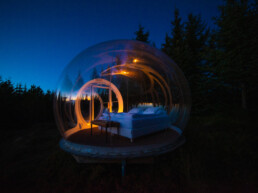
The Golden Circle is a loop of roughly 300 kilometers east of Reykjavík connecting three places: Þingvellir, the Geysir hot spring area, and Gullfoss. It is the most driven route in Iceland and usually the first thing visitors do.
Here is what the name hides: this is not a scenic reserve. It is a working agricultural district. The road between the famous stops runs past dairy farms, sheep farms, greenhouses and a school, and the people on it are mostly going to work. My family has lived and farmed in Biskupstungur, the district that holds most of this route, since 1935.
This page is the overview: distances, road conditions, where the crowds come from and how to stay out of them. The history of each place is deeper than a paragraph can carry, so I keep the history short here and link to the full accounts.
What the Route Actually Is (Logistics & Driving)
From Reykjavík to the first stop, Þingvellir, is about 47 kilometers — roughly 45 minutes. The full loop is around three to three and a half hours of pure driving. With the three main stops, it fills a day.
The main loop is paved the whole way. In summer, any car does it, and the only planning you need is a fuel tank and patience at the car parks. Winter is the same road with different rules: daylight shrinks to a few hours in December, the surface ices, wind matters more than snow, and a few times each winter the road simply closes. Check road.is and vedur.is the morning you go, not the night before. If the locals are not driving, you should not be either.
There is a difference between driving a landscape and understanding a community. You can drive this loop and collect three sights. Or you can notice what is between them: hay fields, cattle sheds, steam rising out of farmland, tractors and school buses using the same road you are. Every sign you pass is a farm name, not an attraction. Most visitors drive through the district to photograph three points in it. The rest of this site exists for the difference.
The Main Stops (And What the Brochures Miss)
Þingvellir National Park
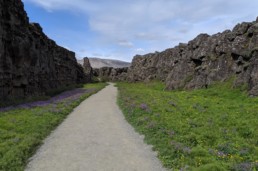
Þingvellir is a rift valley where the North American and Eurasian plates pull apart — the cliff you walk beneath is the edge of North America — and it is where Icelanders founded their assembly in 930, which is why it is both a national park and a UNESCO site. The reality on the ground: you pay for parking, the main route through the gorge is a wide managed path, and from mid-morning until after lunch it moves at the pace of the slowest tour group on it. The park is much larger than that one path.
Read the real history of Peningagjá and the working farm roads here.
Geysir and Strokkur
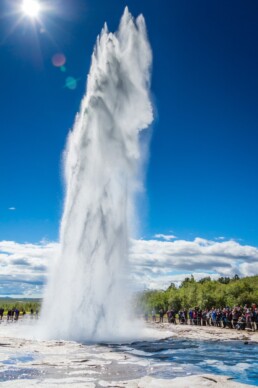
Geysir — the hot spring every geyser on earth is named after — is dormant, and has been for a long time, so do not build your visit around seeing it erupt. Strokkur, a short walk away, is the one that erupts, every few minutes, all day. At midday the rope around it holds a crowd several deep, most of them filming; the eruption lasts seconds, and the wait between eruptions is when you actually look at the place.
Read the history of the 1963 drilling that brought Strokkur back to life.
Gullfoss
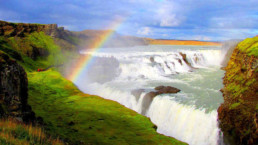
Gullfoss is the Hvítá, a glacial river, going over two steps — about 32 meters — into a canyon. You hear it from the car park; on the lower path the spray reaches you, and in winter that spray freezes and the lower path often closes. It has the biggest car park on the route and, at midday, the fullest. Give it more time than the buses do, if the weather lets you.
Read the history of the Brattholt farmers and the Hvítá river here.
The Timing Problem (Escaping the Wave)
Nearly every scheduled tour leaves Reykjavík between 8:00 and 9:00 in the morning. That puts thousands of people onto the same loop, in the same order, at the same hours: Þingvellir by mid-morning, Geysir at lunch, Gullfoss in the early afternoon. The sites are not too crowded. The schedule is.
The wave has an end. By mid-afternoon the buses turn back toward the city for dinner, and the same viewpoints empty out while there is still usable light. If you control your own schedule, invert it: start behind the wave, not inside it.
Beyond the Big Three
The district does not stop at the three car parks. Laugarás is a geothermal village on the Hvítá where the heat comes out of the ground and gets used — for bathing and for growing. Skálholt, across the river, held the seat of Iceland’s bishops for centuries; more of this country’s history ran through it than through most places the buses stop, and most buses drive past it. The greenhouses around here grow a real share of Iceland’s vegetables on geothermal heat — you can eat a tomato raised a field away from where you are standing. And Brúarfoss, a smaller spring-fed waterfall just off the same loop, has a full guide of its own.
Explore more of the district in The Untold Stories of the Golden Circle.
Where to Stay (Why Day Trips Fall Short)
A day trip spends its best hours on the highway. Leaving the district around 5:00 PM means you were only there when everyone else was — and you sit in a car through the evening, which is when the sites are empty, the light is low, and, in winter, when the northern lights become possible.
The fix is not complicated: sleep in the district. There are farm guesthouses, hotels and campsites along the whole loop, and any of them puts you at the sites before and after the wave instead of inside it. Full disclosure: we run one of the options ourselves — a bubble hotel in a forest a short drive from Geysir — so weigh anything I say about it accordingly. A full, honest review of a winter night in one of the bubbles — including the parts people do not enjoy — is coming to this page soon.